
If you own multiple rental properties, investment assets, or business operations in Texas, one of the most important structural decisions is whether those assets should sit inside separate LLCs or be organized through a Series LLC.
Both approaches can create liability separation, but they do so differently. A Series LLC creates separate liability compartments within one larger LLC structure, while separate LLCs give each asset its own independent legal entity. The right choice depends on more than filing costs. Financing, ownership, accounting, future acquisitions, and eventual sales all matter.
Consider a Texas investor who owns four rental properties. The investor could create a separate LLC for each property:
- 101 Main Street LLC
- 202 Oak Street LLC
- 303 Elm Street LLC
- 404 Pine Street LLC
The investor could instead form North Texas Property Holdings LLC and create:
- Series A, which owns 101 Main Street
- Series B, which owns 202 Oak Street
- Series C, which owns 303 Elm Street
- Series D, which owns 404 Pine Street
In either structure, the goal is similar. If a liability arises from one property, the investor wants to avoid exposing unrelated properties to that same liability. For a deeper explanation of how the structure works, see What Is a Series LLC in Texas, and When Does It Make Sense?
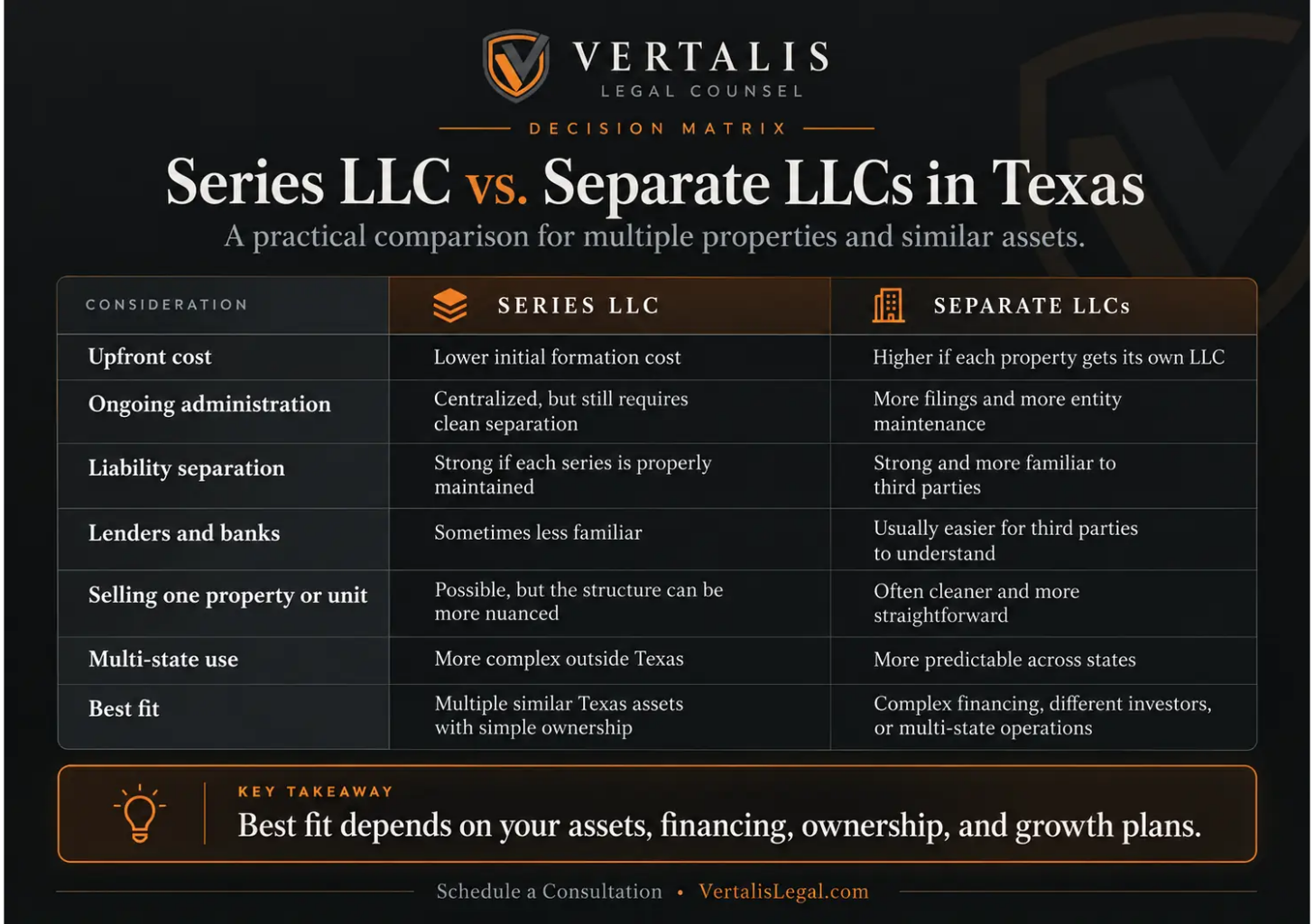
Liability Separation Is Only Part of the Decision
Liability protection is usually the reason owners begin comparing these structures, but it should not be the only consideration. Separate LLCs are generally easier for third parties to understand because each property sits inside its own legal entity. Banks, lenders, title companies, insurance companies, and buyers regularly deal with traditional LLCs, and that familiarity can make transactions smoother.
A Series LLC can accomplish a similar liability objective, but some third parties may require additional documentation to understand the relationship between the parent LLC and an individual series. The better question is therefore not simply whether both structures can provide separation, but which structure will remain practical once financing, operations, and future transactions are taken into account.
A Series LLC Can Be Easier to Scale
One of the strongest arguments for a Series LLC is scalability. An investor who expects to acquire ten or fifteen properties over time may not want to form and maintain a new LLC for every acquisition. A Series LLC can provide a more centralized framework while still allowing each property to be placed into its own series.
Separate LLCs generally involve more formation filings, organizational records, operating agreements, ownership records, and entity maintenance. A Series LLC can reduce some of that duplication, but it does not eliminate the need for operational separation. Each series still needs clearly identified assets, income, expenses, contracts, and liabilities.
Banking, Accounting, and Financing Still Matter
A Series LLC should not be treated as one large pool of money simply because everything exists under one parent company. If Series A owns one property and Series B owns another, the books should clearly show which income, expenses, assets, and liabilities belong to each series. Separate bank accounts are generally a strong operational practice because they make that separation easier to maintain.
The same principle applies to leases, contracts, insurance, invoices, accounting records, and transfers between series. Standalone LLCs tend to force this separation more naturally because each company already has its own records and accounts, while a Series LLC requires the owner to be intentional about maintaining the internal boundaries.
Financing can also change the analysis. A lender may be more comfortable making a loan to 101 Main Street LLC because the borrower and collateral are easy to identify. With a Series LLC, the lender may want additional confirmation that the correct series owns the property, has authority to borrow, and is properly separated from the other series. Guarantees and cross-collateralization can further reduce the benefit of separate liability compartments if one series becomes responsible for another series's debt.
Different Investors Can Make Separate LLCs Cleaner
A Series LLC can support different ownership arrangements, but the structure becomes more complicated when every asset has a different investor group. If one property is owned by a single investor, another is owned by two partners, and a third includes outside investors, the operating agreement needs to address separate ownership percentages, voting rights, capital contributions, distributions, transfers, and exit rights for each series.
At some point, separate LLCs may become easier to understand because each asset can have its own operating agreement and governance structure. The more similar the ownership is across the portfolio, the more attractive a Series LLC can become. The more different each investment is, the more useful separate entities may be.
The Exit Strategy Matters Too
The eventual sale of an asset should also be part of the decision. If 303 Elm Street is owned by 303 Elm Street LLC, the property already sits inside an independent entity, which can make a later transaction easier for buyers, lenders, and attorneys to evaluate.
A property owned by Series C of a Series LLC can still be sold, but the transaction may require additional analysis regarding title, contracts, liabilities, financing, and the relationship between that series and the parent LLC. For long-term portfolios of similar assets, that added complexity may be minor. For properties expected to change hands frequently, standalone LLCs may provide a cleaner transactional structure.
Multi-State Ownership Adds Complexity
A Texas Series LLC is created under Texas law, but other states may treat Series LLCs differently. If a portfolio expands outside Texas, the owner may need to consider foreign registration, taxation, and whether another state will recognize the liability separation between individual series. Traditional LLCs are generally more familiar across jurisdictions, so a Texas-focused portfolio may be a stronger candidate for a Series LLC than a portfolio spread across several states.
When Each Structure May Make More Sense
A Series LLC may be a strong fit when:
- the assets are primarily in Texas
- the assets are similar in nature
- ownership is relatively consistent
- additional assets will be acquired over time
- the assets will likely be held long term
- financing is relatively straightforward
Separate LLCs may be preferable when:
- different investors participate in each asset
- financing arrangements are complicated
- lenders prefer standalone entities
- assets will be bought and sold frequently
- the portfolio spans multiple states
- ownership or management varies significantly
The Best Structure Depends on How the Portfolio Will Operate
There is no universal rule that every rental property should have its own LLC, and there is no rule that every owner with multiple assets should use a Series LLC. A Series LLC can be particularly attractive for a growing Texas portfolio with similar assets, consistent ownership, and straightforward financing, while separate LLCs may provide a cleaner structure when investors, loans, sales, or multi-state operations become more complicated.
The entity structure should reflect where the portfolio is going, not simply what is easiest to file today. If you are deciding how to structure multiple properties, investments, or business operations, Vertalis Legal Counsel can help evaluate the ownership, financing, liability, and growth considerations involved.
Schedule a consultation to discuss whether a Series LLC or multiple standalone LLCs make more sense for your business.